Research in progress
RoboSkin Working Papers
Explore research proposals developed for RoboSkin.ai, with versioned manuscripts, reproducible experiments, and clear evidence status.
Browse working papers ->Read paper reviews across robot skin, tactile sensing, manipulation, and robot learning. Each review explains the method, what the authors measured, where the evidence stops, and which primary sources to consult before attempting a reproduction.
Public notes use conservative language. Application-specific performance, durability, and integration claims still need source-backed, application-specific evidence.
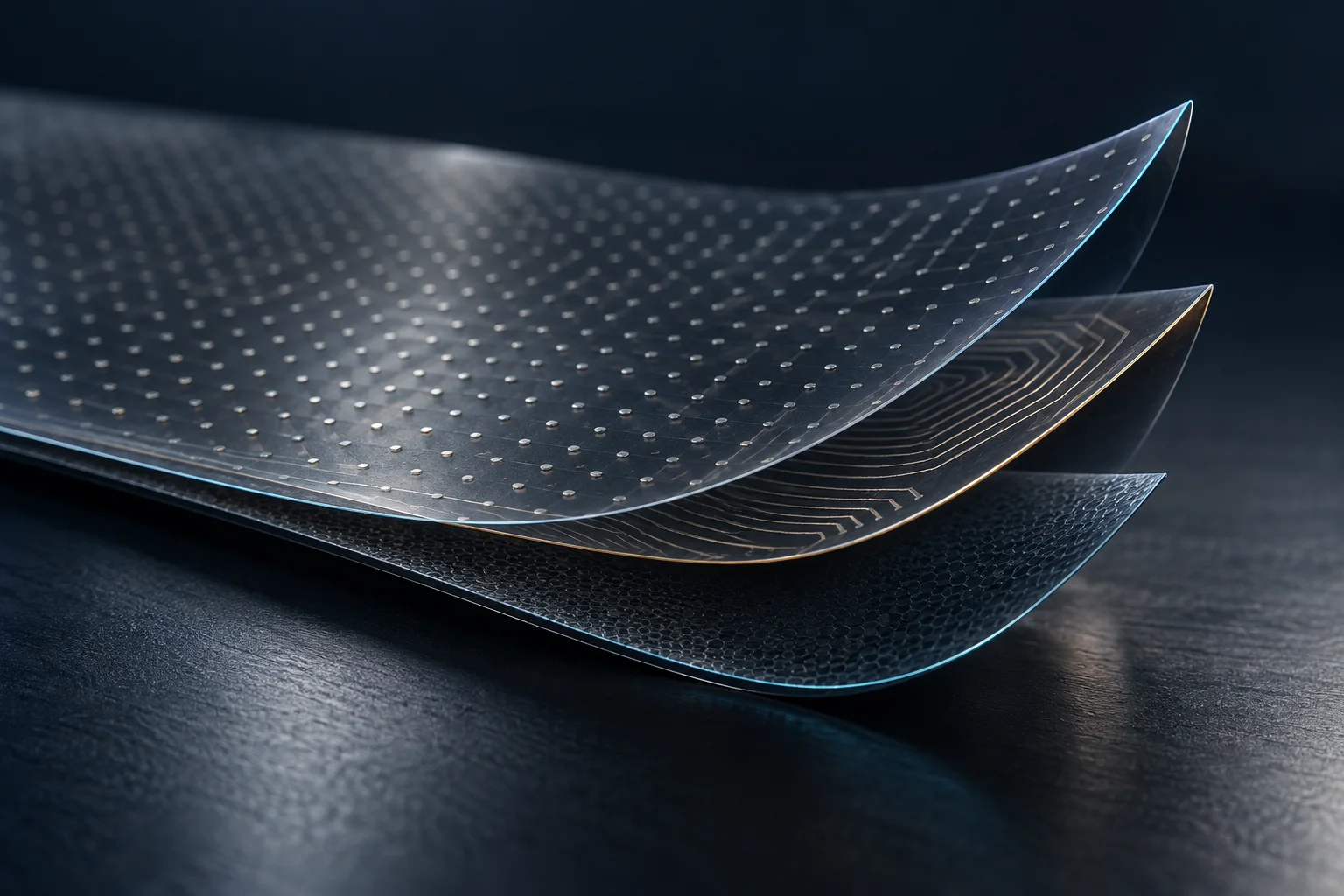
Research in progress
Explore research proposals developed for RoboSkin.ai, with versioned manuscripts, reproducible experiments, and clear evidence status.
Browse working papers ->Source boundary
Each note keeps source attribution separate from RoboSkin.ai interpretation.
Evaluation lens
Performance, durability, and integration language is framed as evidence to verify.
Organization map
Trace source-listed universities, research labs, and companies to the robot AI models and primary evidence that support each relationship.
Browse research organizations ->Physical AI route
Use the Physical AI explainer to connect robot skin research, tactile sensing, and contact feedback without turning source notes into product claims.
Open Physical AI contact-feedback route ->Touch data route
Use the touch-data guide to connect tactile papers to contact events, timestamps, body frames, calibrated values, and robot actions.
Trace Physical AI touch data ->Project history
Use the source-backed FP7 project record for grant dates, funding, partners, the 2013 Springer chapter, and a clear no-affiliation boundary.
Open the EU ROBOSKIN project record ->Research lane
2026-06-17 / 5 min read
A practical research note on DexSkin, conformable capacitive e-skin, high-coverage tactile sensing, calibration transfer, and contact-rich manipulation learning.
Research lane
2026-04-23 / 5 min read
A research-oriented explanation of why full-hand tactile coverage matters for adaptive grasping, occluded manipulation, and contact-aware robot hands.
Research lane
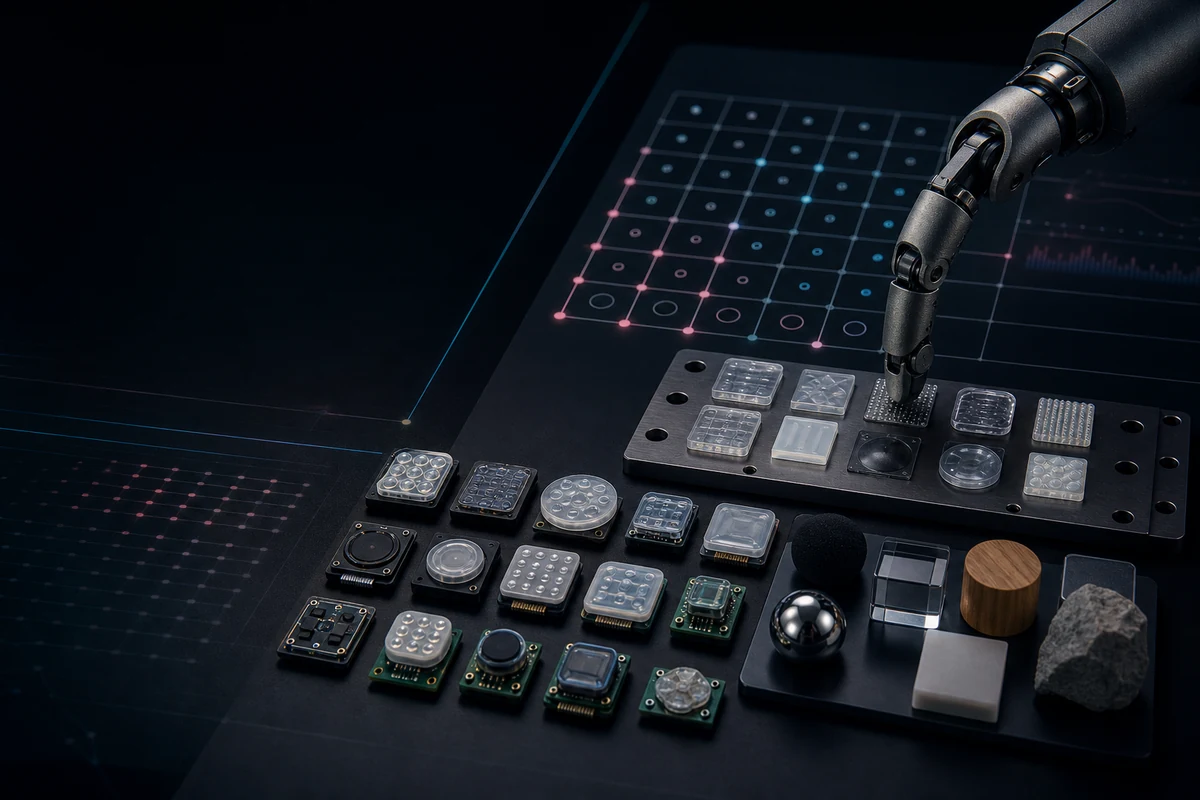
2026-06-18 / 5 min read
A source-backed research landscape note on Tactile Robotics outlook, sensor types, distributed tactile sensing, simulation, benchmarking, and data interpretation.
Research lane
2026-06-16 / 5 min read
A source-backed note on fluid-based soft robot skin, human-robot interaction, contact detection, temperature control, and why exterior feel matters.
Research lane
2026-08-18 / 8 min read
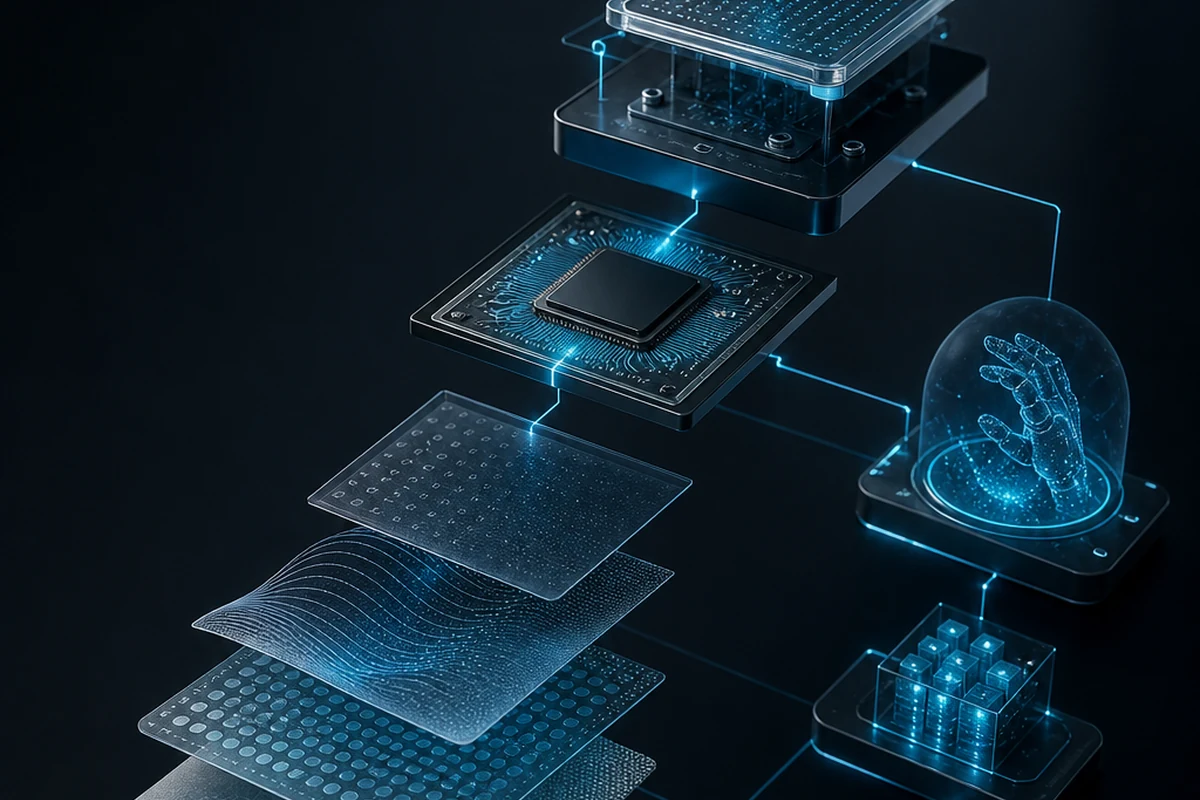
Tac4Loco turns bilateral plantar pressure maps into post-contact feedback for Unitree G1 locomotion on slopes, partial support, foam, and gravel.
Research lane
2026-06-18 / 5 min read
A source-backed brief on origami capacitive robotic e-skin, large-area coverage, super-resolution tactile localization, shear sensing, and proximity detection.
Research lane
2026-06-18 / 5 min read
A practical research note on open-source magnetic tactile calibration, three-axis force sensing, in-situ calibration, and why low-cost sensors still need repeatable setup.
2026-06-18 / 5 min read
A source-backed note on eFlesh, cut-cell microstructures, 3D-printable magnetic tactile sensors, low-cost fabrication, and robot gripper deployment tradeoffs.
Research lane
2026-04-18 / 5 min read
A deployment-focused article on large-area tactile arrays, curved-surface coverage, adjustable resolution, slip detection, and manufacturing tradeoffs.
Research lane
2026-06-18 / 5 min read
A research note on optical/electronic artificial skin, CNT haptic layers, near-infrared molecular sensing, force-temperature sensing, and robotic perception beyond touch.
Research lane
2026-04-22 / 5 min read
A practical brief on temperature and pressure bimodal tactile sensing, signal decoupling, and why crosstalk matters for robot skin.
Research lane
2026-06-18 / 5 min read
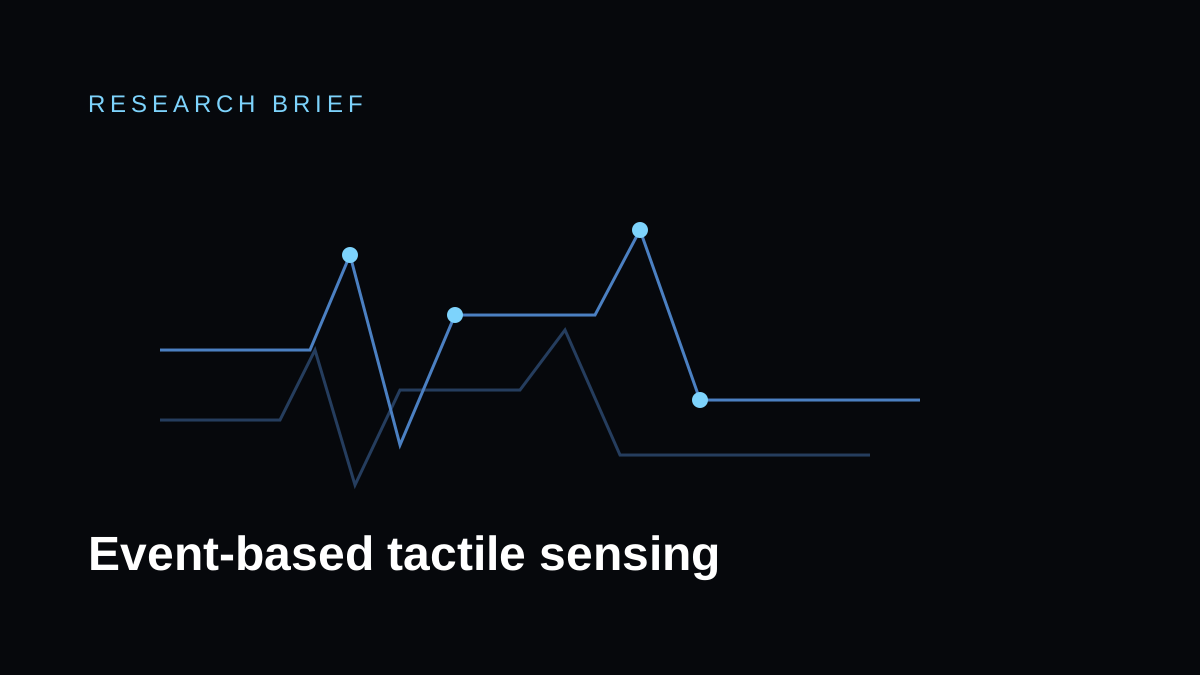
A technical brief on bioinspired spiking architecture, large-area soft e-skin, low-power tactile localization, and neuromorphic touch processing.
Research lane
2026-09-19 / 7 min read
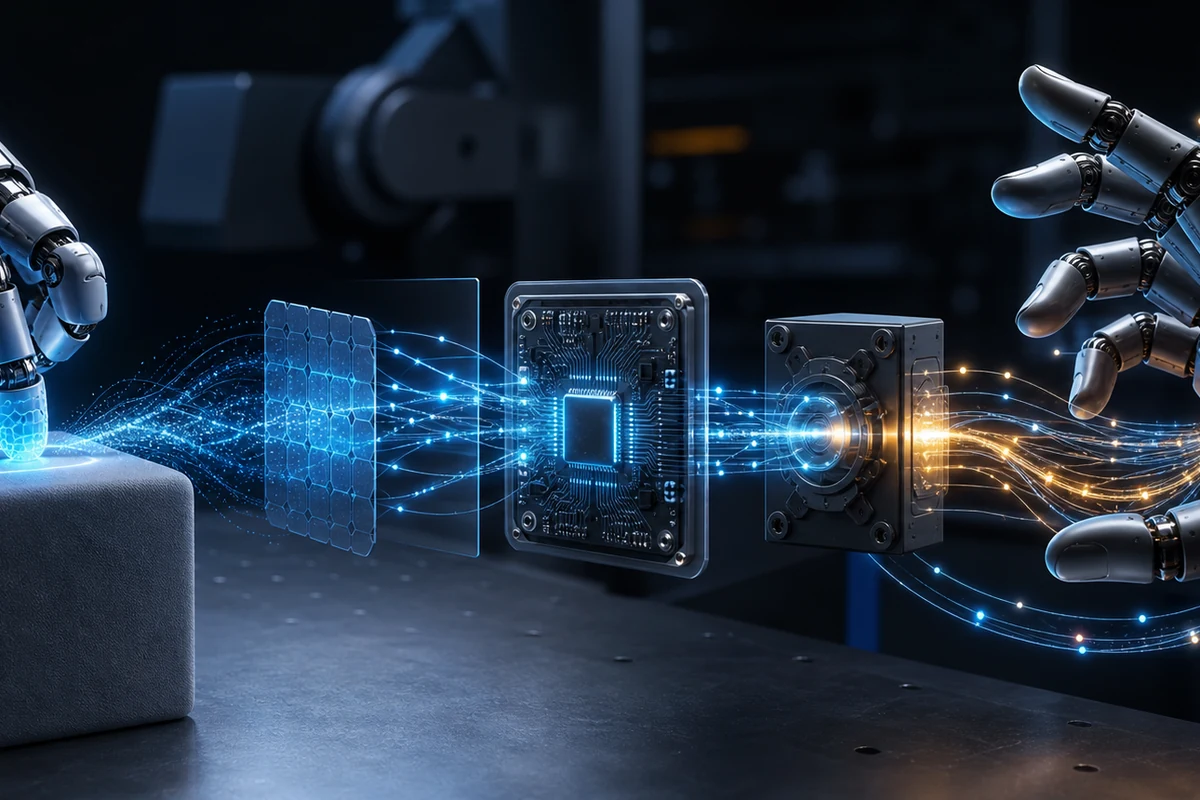
Pressure and vibration improve slip recognition together. Independent motion labels and five failed recoveries explain why detector quality and controller quality need separate tests.
2026-09-19 / 8 min read
A 60 Hz tactile policy traces farther than a joint-only baseline, but the useful lesson is how sensor detail, pretraining, temporal context and action timing interact.
2026-09-19 / 8 min read
Rendering contact as image arrows reuses a visual policy’s input pathway. The hardware and ablations show why spatial alignment, signal normalization and training still matter.
2026-09-18 / 7 min read
Human tactile pretraining improves the paper’s contact predictions, but synthetic training data does not consistently improve real-robot policy scores. Here is what each experiment measures.
2026-09-18 / 8 min read
Bench2Dex connects teleoperation, replay, tactile maps, and evaluation across 12 hand embodiments. We examine the data contract and distinguish simulation access from physical sensor validation.
2026-08-22 / 8 min read
ADEPT reports 3/10 vision-only versus 8/10 visuo-tactile final success in one matched Flexiv-Sharpa insertion condition, with ten physical trials per condition.
Research lane
2026-08-22 / 8 min read
A GelSight Mini and 32-DoF fingertip display made two teleoperation tasks more natural and consistent, but no autonomous robot policy was trained or evaluated.
Research lane
2026-04-19 / 5 min read
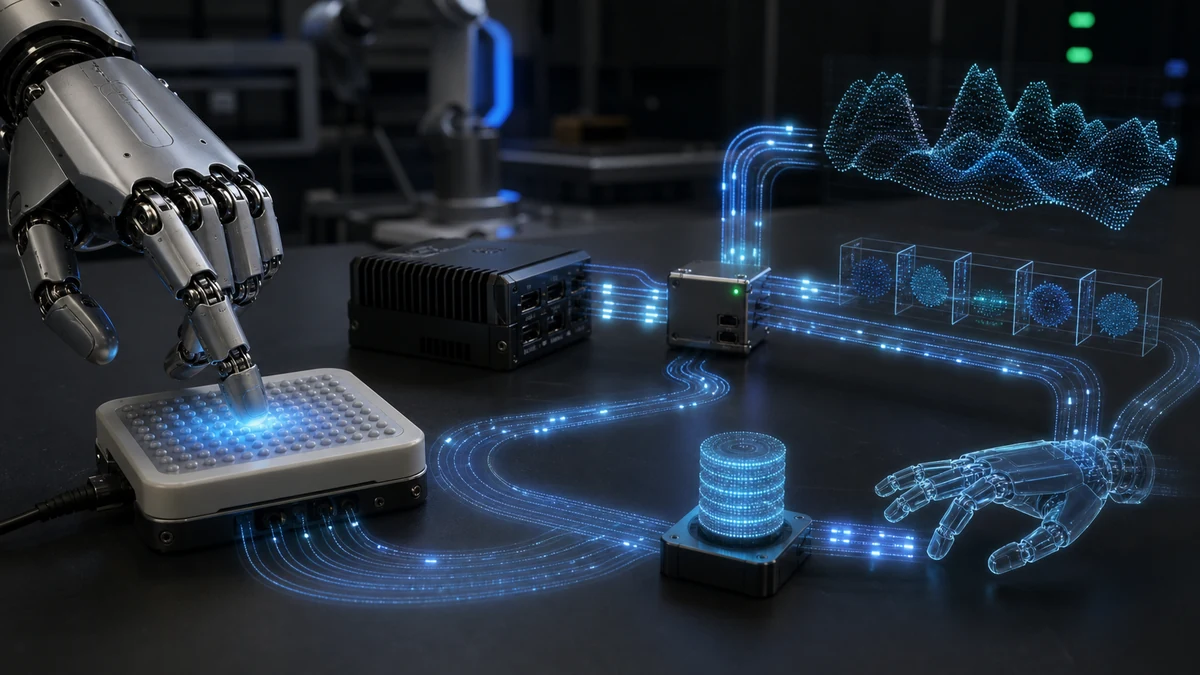
A robotics software guide to ROS 2 tactile data messages, rosbag workflows, force-torque context, and replayable robot skin evaluation.
Research lane
2026-06-18 / 5 min read
A source-backed note on AI-integrated bionic fingertip e-skin, wet slippage detection, fingerprint microtextures, and why dry-surface slip claims are not enough.
2026-06-18 / 5 min read
A source-backed note on slip-actuated bionic tactile sensing, dynamic DC generator E-textile, robotic fingers, and real-time grasp monitoring.
Research lane
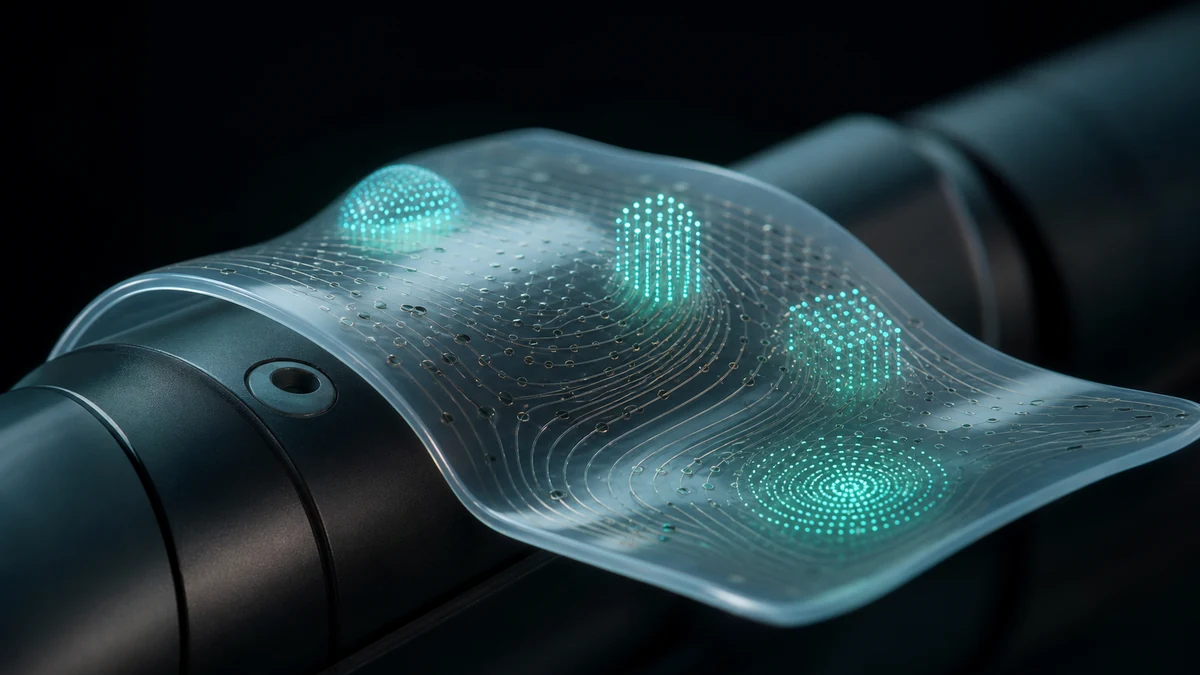
2026-04-24 / 7 min read
A peer-reviewed single-material robotic skin uses wrist-mounted EIT electrodes and data-driven channel selection to interpret touch, strain, heat, damage, environment, and proprioception across a soft hand.
2026-04-20 / 5 min read
A conservative guide to self-healing e-skin claims, multimodal sensing, damage recovery, and what must be validated before deployment language is credible.
Research lane

2026-08-22 / 17 min read
Choose the matching code branch and dataset before using UniVTAC. This guide separates its tactile encoder, simulation benchmark, public downloads and paper-reported physical results.
2026-08-22 / 10 min read
A 2026 review maps vision-based tactile sensing as one integrated stack: deformable contact hardware, optical readout, tactile representations, learning, simulation, datasets, and robot action.
2026-08-15 / 6 min read
FeelWorld adds explicit contact, force-related tactile, and slip prediction to a visual world model for contact-rich robot planning.
2026-08-05 / 8 min read
HT-Bench v2 pairs egocentric vision with millions of full-hand tactile frames, corrects the vision-to-tactile metric split, and adds four real-robot evaluations.
2026-06-18 / 5 min read
Sparsh-X fuses image, audio, motion, and pressure from Digit 360, showing how multisensory touch can improve tactile AI for robot manipulation.
2026-06-18 / 5 min read
A technical note on MiTaS, heterogeneous tactile sensors, GelSight and event-based touch fusion, and why tactile frequency matters for robot hand learning.
2026-06-18 / 5 min read
Dream-Tac models action-conditioned tactile futures for contact-rich robot manipulation, showing why robot skin data needs prediction, not only reaction.
2026-06-18 / 5 min read
GenForce explores transferable force sensing across tactile sensors, reducing repeated calibration work for robot skin replacements and hardware changes.
2026-04-21 / 5 min read
A source-backed note on event-based and neuromorphic tactile sensing, sparse contact events, and why low-latency touch matters for robot control.
Research lane
2026-08-22 / 8 min read
SoftVTBench pairs simulated visual and tactile observations with evaluator-only FEM state; its Hugging Face card and GitHub README currently disagree about the hosted release scale.
2026-08-21 / 7 min read
TactiDex aligns whole-hand tactile signals with kinematic and object states to evaluate physically grounded human-to-robot dexterous transfer.
Research lane
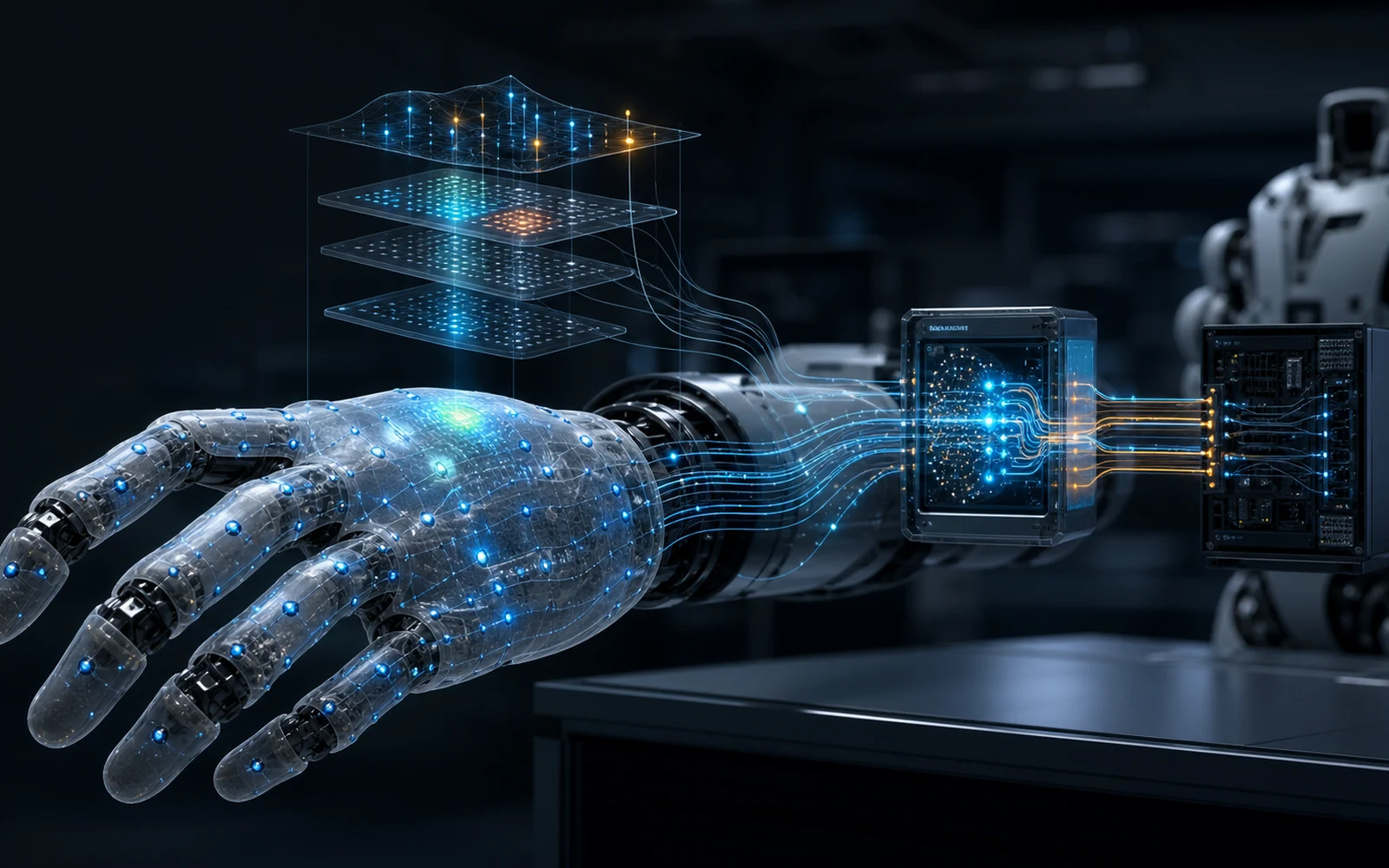
2026-06-18 / 5 min read
A research note on FreeTacMan, robot-free visuo-tactile datasets, tactile AI data collection, and why robot skin models need contact diversity.
2026-06-18 / 8 min read
The GIST preprint reports 101.9K visual-tactile-action samples for towel and sponge manipulation, with dense hand touch, two camera views, and explicit access limits.
Research lane
2026-09-11 / 8 min read
TacVerse compares shape, grating, and force perception across tactile sensors. Its public code and gated dataset are now identifiable, but transfer quality depends strongly on the task.
2026-08-22 / 8 min read
PRISM reports 5,000+ robot trajectories across 25+ industrial tasks, but tactile observations cover only a subset and the announced dataset download is not yet available.
2026-08-21 / 9 min read
RoboTacDex reports 6,000+ Unitree G1 trajectories across 19 tasks, an author-reported 23 skills, and 22 objects, but public dataset access remains pending.
Research lane
2026-04-25 / 5 min read
A source-backed technical brief on miniaturized tactile sensors that separate normal force, shear force, slip, and texture signals for dexterous robot hands.
Research lane
2026-09-11 / 7 min read
A wearable capacitive fingertip sensor predicts a dense contact map for human-to-robot replay. We separate simulation labels, physical measurements, and closed-loop grasping results.
2026-08-21 / 8 min read
T-Rex reports a 100-hour collection and a 30-point gap over EgoScale; its official release now provides code, checkpoints, and an approximately 50-hour public subset.
Research lane
2026-08-21 / 7 min read
HiTac-WAM ranks candidate robot actions with hierarchical tactile forecasts, then checks predicted touch against measured touch during execution.
Source correction path
Share a source, correction, or terminology route so the site can stay accurate and clearly framed.