Full-hand tactile sensing for adaptive dexterous grasping
A research-oriented explanation of why full-hand tactile coverage matters for adaptive grasping, occluded manipulation, and contact-aware robot hands.
Updated technical brief - May 2026
Why this source matters
Robot hands are often evaluated through motion: how many degrees of freedom they have, how human-like the finger geometry looks, or whether the hand can close around an object. Motion matters, but motion without contact feedback is limited. The Nature Machine Intelligence article on high-resolution touch across robotic hands is useful because it frames tactile sensing as part of adaptive manipulation, not as a cosmetic surface layer.
The reported F-TAC Hand work is relevant to RoboSkin.ai because it treats a robot hand as a contact-rich system. The key issue is not whether a hand can touch an object. The issue is whether it can sense enough of the contact interaction to adjust its behavior while grasping.
Core idea
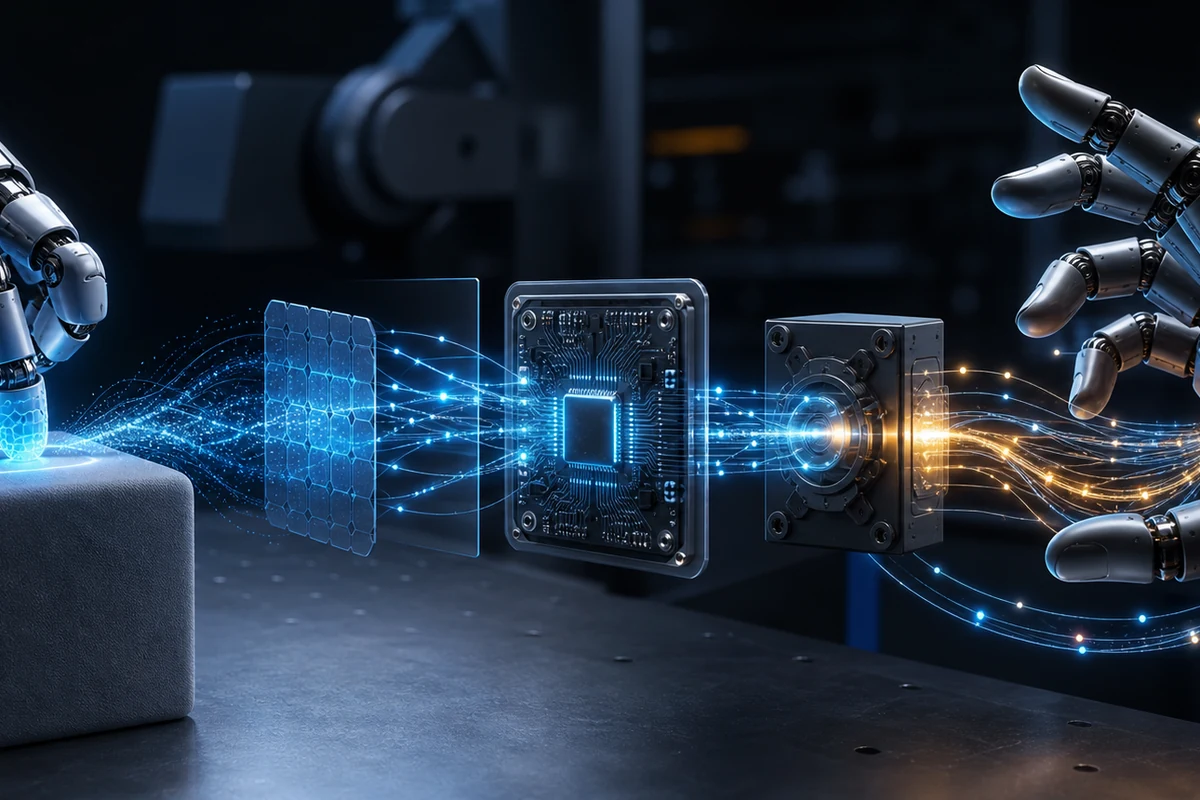
A robot hand with only joint encoders and vision can estimate where its fingers are, but it may not know what is happening at the contact surface. The object can shift, rotate, deform, or slip while the hand blocks the camera. Full-hand tactile sensing helps fill that gap by providing distributed information across fingers, palm, or other contact areas.
Adaptive grasping depends on feedback loops. The hand touches, senses, adjusts, and senses again. If tactile feedback is sparse, the controller may know only that one pad is pressed. If coverage is broader and higher resolution, the controller can detect contact location, pressure distribution, emerging slip, and whether the grasp is becoming more stable or less stable.
| Sensing level | What the hand can know | Typical limitation |
|---|---|---|
| No tactile sensing | Finger pose and planned motion | Contact outcome must be guessed |
| Single force sensor | Aggregate load at a point or joint | Little information about contact pattern |
| Fingertip pads | Local contact on selected surfaces | Palm and side contacts may be invisible |
| Full-hand coverage | Distributed contact across the hand | More data, wiring, calibration, and processing |
Why full-hand coverage is difficult
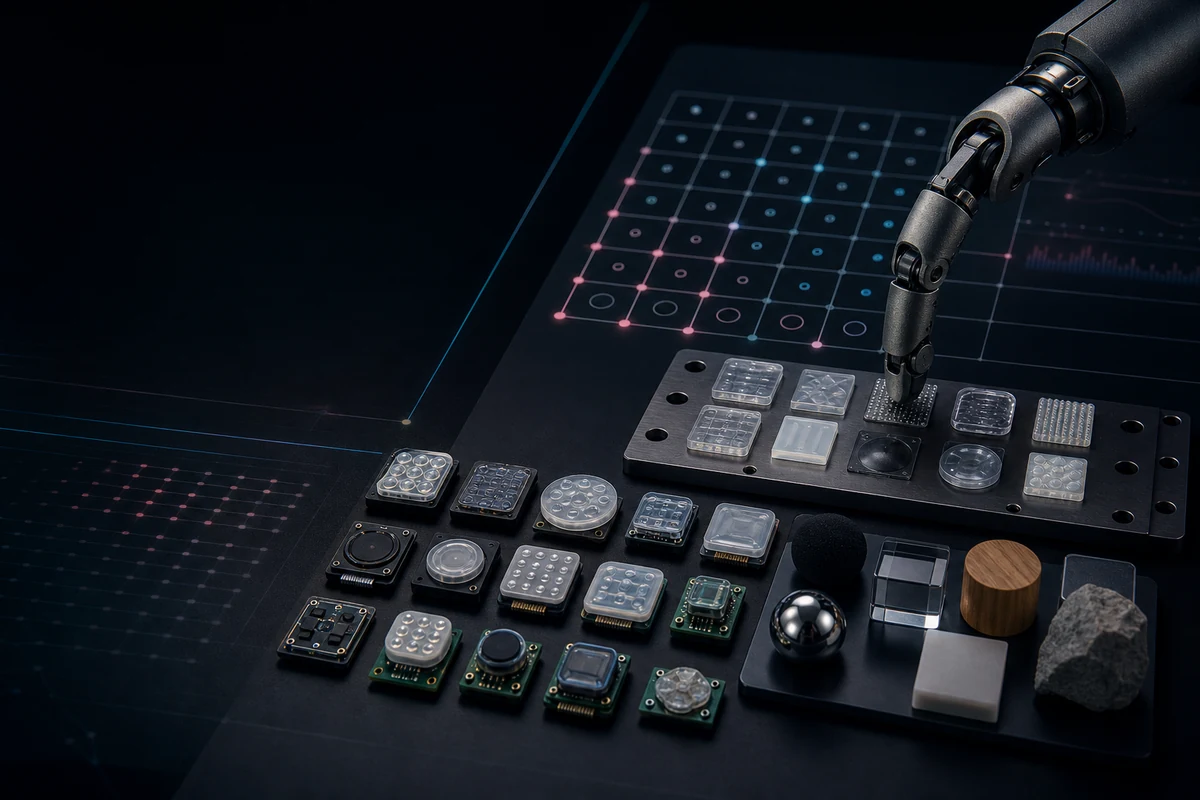
Full-hand tactile sensing is hard because a hand is not a flat plate. Fingers bend, surfaces stretch, cables move, and contact can happen at unexpected locations. A sensor placed on a fingertip may be useful for pinch grasping, but a power grasp may involve the palm, finger sides, and multiple contact transitions.
The data volume also grows quickly. More tactile pixels or taxels create richer information, but they also create a software problem. A controller cannot simply consume unfiltered high-dimensional tactile streams without a clear representation. Teams need feature extraction, event detection, compression, or learning-based policies that know what to do with the data.
Reader value
The practical value of this paper is that it pushes evaluation beyond fingertip demos. Many robot skin examples look persuasive because a single pad responds clearly when pressed. A full hand is less forgiving. Contacts appear on the side of a finger, across the palm, near a joint, or in multiple places at once. A controller that cannot locate those contacts in the hand model cannot use them well.
This is also where source-backed content can add original analysis. The useful comparison is not "tactile sensing versus no tactile sensing." The useful comparison is which coverage pattern supports which manipulation behavior. Fingertip sensing may be enough for controlled pinch tasks. Palm and side coverage become more important for power grasps, handovers, and objects that roll or shift under partial occlusion.
Evaluation checklist
- Does the sensor cover only fingertips, or also the palm and finger sides?
- Does the hand preserve range of motion after the tactile layer is installed?
- Are tactile readings spatially registered to the robot hand model?
- Can the system detect slip or contact transitions during motion?
- Is tactile data synchronized with joint state, vision, and force-torque data?
- Does the evaluation include occluded or visually ambiguous manipulation tasks?
What this means for tactile AI
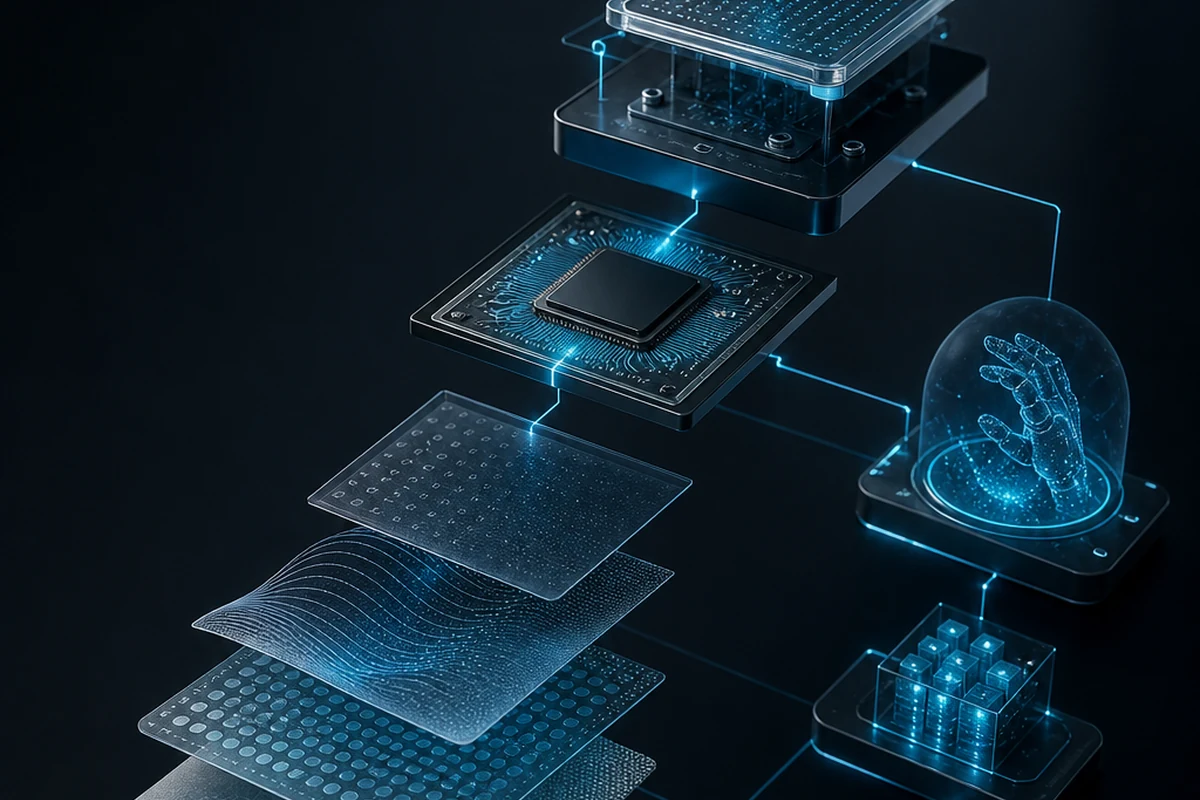
Tactile AI is not only a model that classifies touch. It is the pipeline that turns touch into action. A full-hand system needs sensing, timestamping, calibration, spatial mapping, logging, policy input, and validation. If any part is weak, the tactile layer becomes a data generator rather than a useful control input.
For example, a high-resolution skin may detect a local pressure pattern, but the robot still needs to know which finger segment produced that pattern, whether the object is expected to move, what the safe grip force is, and whether increasing force would damage the object. That is why tactile sensing and robot control must be discussed together.
What not to infer
The Nature Machine Intelligence article should not be treated as a blanket claim that all full-hand skins are deployable. Research results depend on the hand design, sensor layout, tasks, training data, and evaluation method. A full-hand sensor system that works in one robotic hand may not transfer directly to another hand with different geometry, compliance, cable routing, or controller architecture.
For RoboSkin.ai, the source supports a conservative editorial point: robot hands need more than attractive mechanical design. They need contact feedback that is placed, calibrated, and used by the control stack. Thin content that says "humanoid hands need touch" is not enough. Useful content should explain why coverage, synchronization, and adaptive response matter.
Source
Continue the topic