Tactile Robotics outlook for robot skin research priorities
A source-backed research landscape note on Tactile Robotics outlook, sensor types, distributed tactile sensing, simulation, benchmarking, and data interpretation.
Updated technical brief - June 2026
Why this source matters
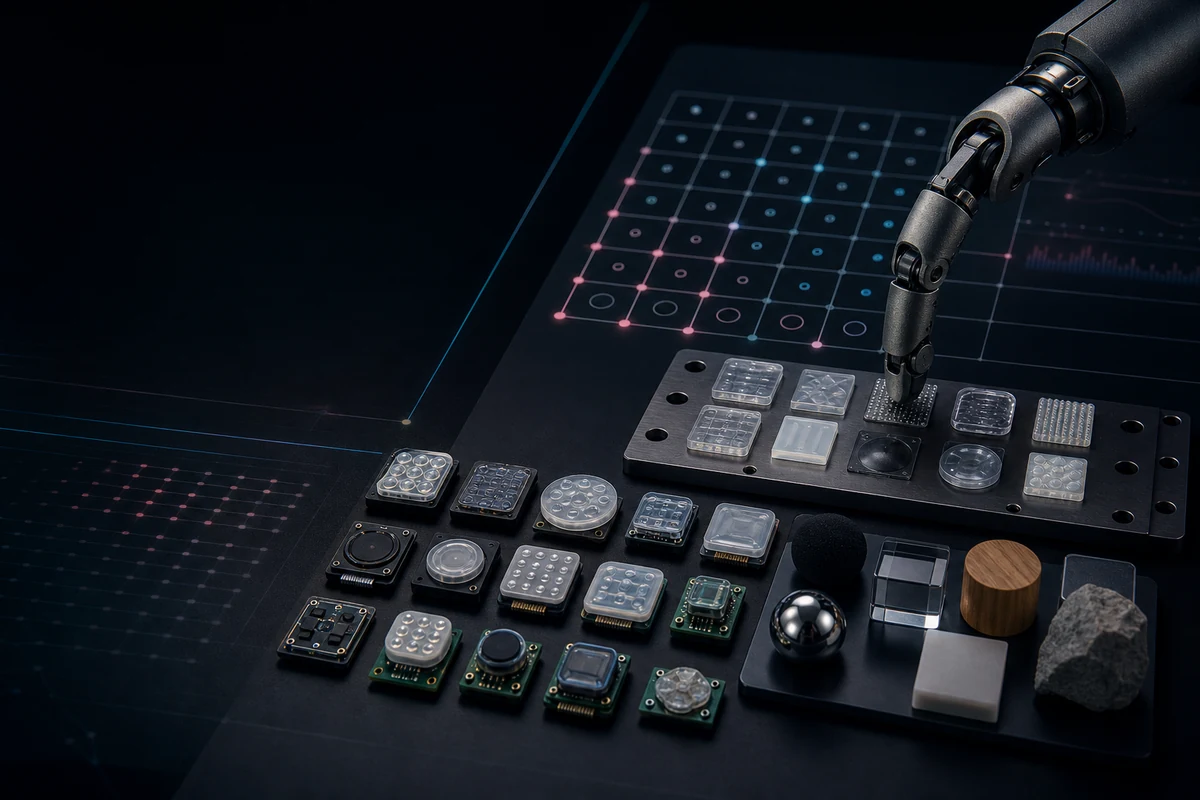
Individual robot skin papers can be narrow: one sensor, one material, one hand, one task. The Tactile Robotics outlook article is useful because it steps back and maps the field. It discusses tactile sensor types, distributed tactile sensing, simulation tools, benchmarking, and tactile data interpretation as part of a wider robotics research landscape.
For RoboSkin.ai, this source is useful as a category map. It helps keep the site from becoming a pile of unrelated papers. Robot skin content needs a structure that connects hardware, data, control, benchmarking, and applications.
Core idea
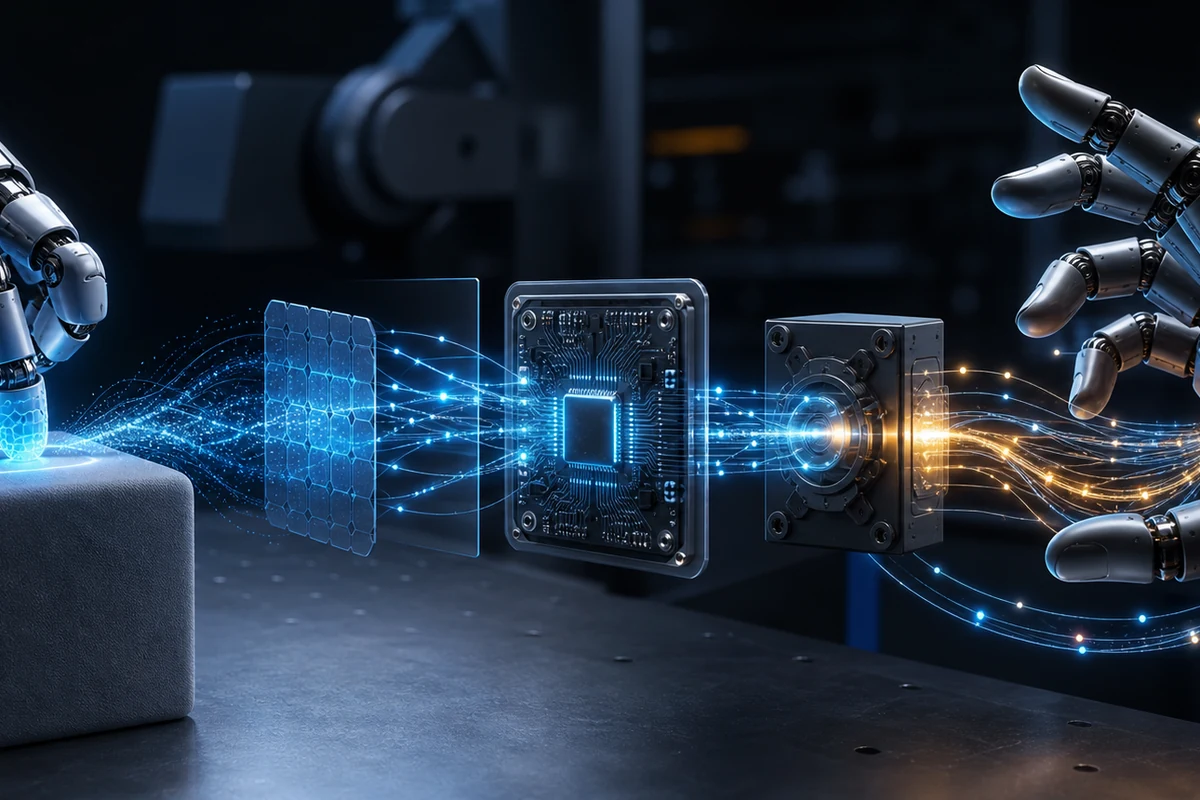
Tactile robotics is not only sensor fabrication. It includes how touch is sensed, simulated, interpreted, benchmarked, and used for robot behavior. That matches the direction of RoboSkin.ai: robot skin should be treated as a stack, not a single layer.
| Research layer | What it covers | RoboSkin.ai use |
|---|---|---|
| Sensor types | Materials, readout, modality | Categorize hardware routes |
| Distributed sensing | Skin over hands or bodies | Evaluate coverage and wiring |
| Simulation | Synthetic contact data | Discuss sim-to-real limits |
| Benchmarking | Comparable tasks and metrics | Avoid isolated demo claims |
| Data interpretation | Turning signals into state | Connect tactile AI to action |
Engineering implications
A field outlook is not a deployment guide, but it is useful for building a content taxonomy. If a note only describes sensitivity, it belongs in hardware. If it describes a dataset, it belongs in tactile data. If it describes a policy, it belongs in tactile AI. If it describes body coverage, it belongs in distributed robot skin.
The technical boundaries matter: material behavior, sensing, integration, and robot learning are related but distinct layers that should be compared explicitly.
Evaluation checklist
- Use the outlook to identify which layer each new paper belongs to.
- Separate tactile sensor research from tactile robotics behavior.
- Ask whether a source contributes hardware, data, simulation, benchmarking, or control.
- Look for benchmarkable claims instead of one-off demonstrations.
- Track gaps: calibration, durability, large-area wiring, and policy transfer.
- Use review papers as maps, not as proof of deployment readiness.
What not to infer
This source should not be treated as evidence that any single robot skin technology is commercially ready. It is a landscape paper. Its value is organizing the field and identifying research directions.
Each research note maps to a layer in the tactile robotics stack so readers can connect individual findings to materials, sensing, integration, or robot learning.
Source
Continue the topic