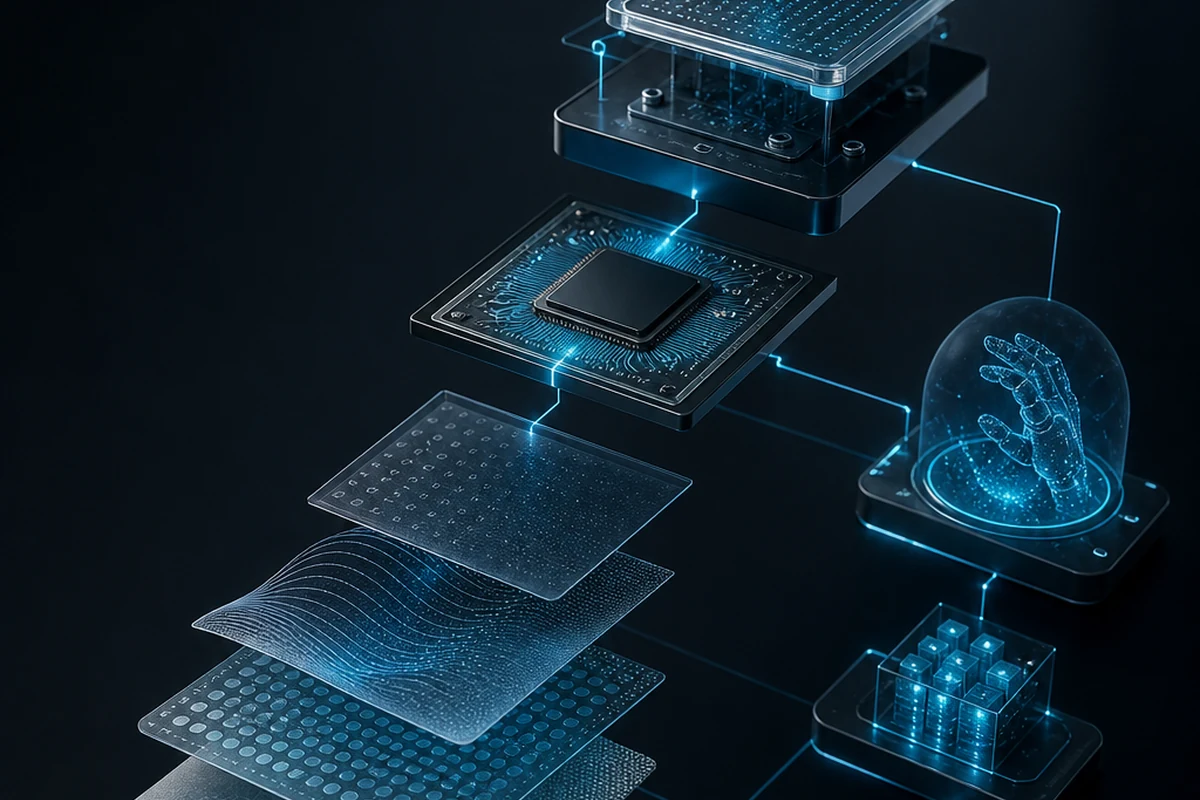
FreeTacMan robot-free visuo-tactile data collection for tactile AI
A research note on FreeTacMan, robot-free visuo-tactile datasets, tactile AI data collection, and why robot skin models need contact diversity.
Updated technical brief - August 2026
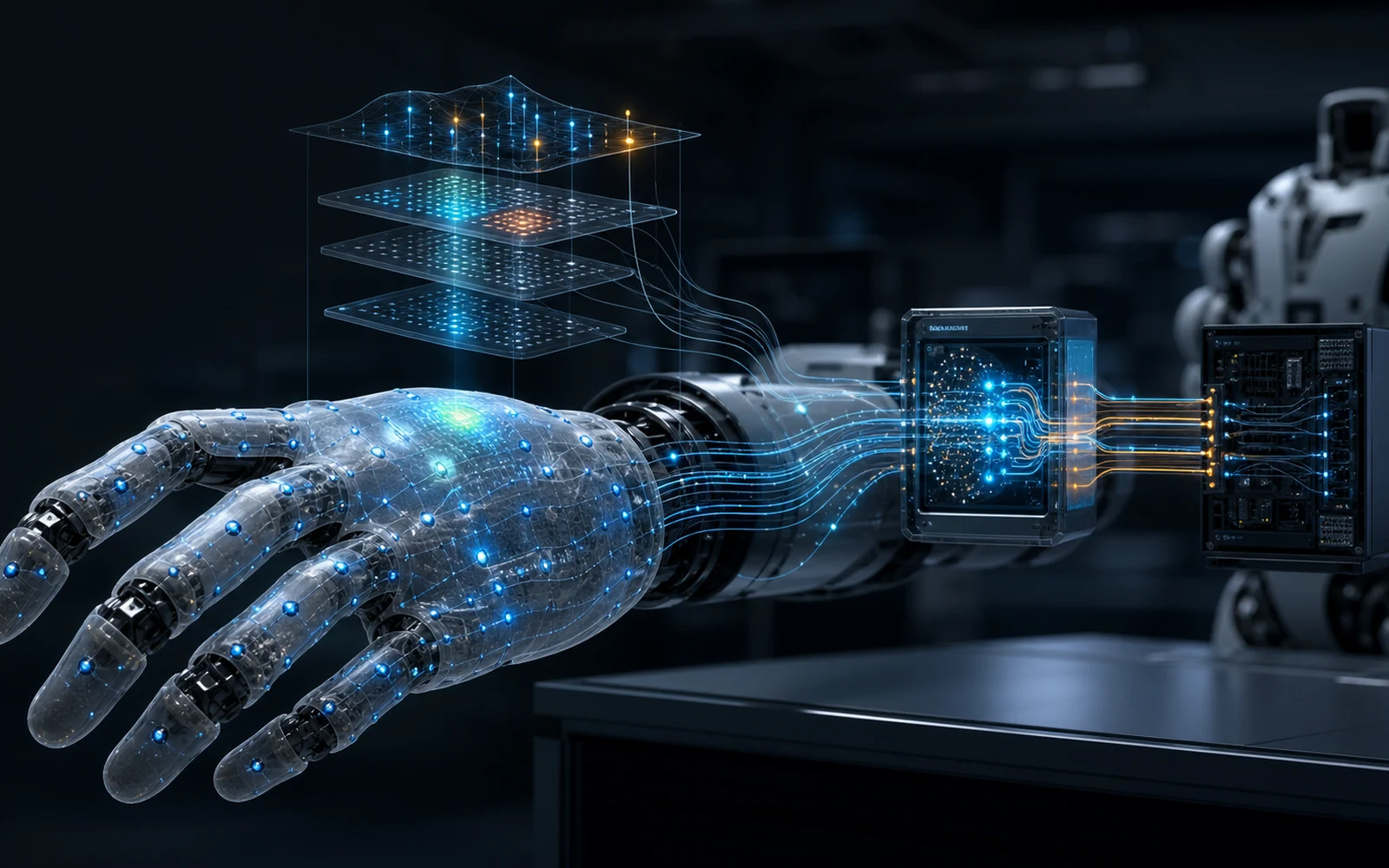
FreeTacMan is a robot-free visuo-tactile data collection system for contact-rich manipulation. It addresses the cost and limited task coverage of collecting every tactile demonstration with a fixed robot arm. For robot skin and tactile AI, the system matters because broader human-guided contact data can accelerate learning, while still leaving embodiment transfer and target-robot validation as explicit engineering constraints.
Source findings
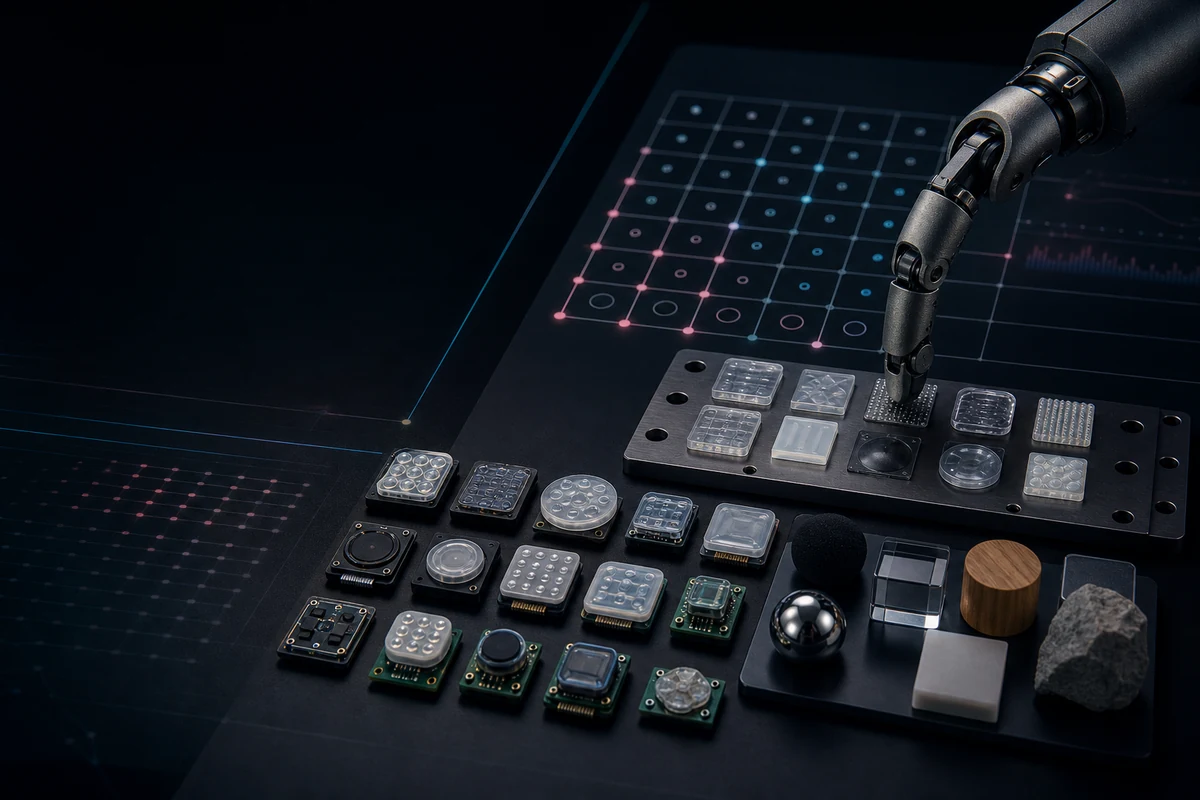
Tactile AI needs data. Collecting robot tactile data is slow because the sensor is often tied to a specific robot, gripper, controller, and task setup. The FreeTacMan preprint is useful because it explores robot-free data collection using a human-centric visuo-tactile device.
The source describes a wearable or handheld data collection approach with visuo-tactile grippers and optical tracking. It aims to capture human interaction, tactile feedback, and motion information for contact-rich manipulation. For RoboSkin.ai, this matters because data collection is one of the bottlenecks between tactile sensor hardware and useful robot policies.
RoboSkin analysis
FreeTacMan separates tactile data collection from a fixed robot embodiment. Instead of requiring a robot arm for every demonstration, a human operator can collect visuo-tactile examples through a portable device. That can make task coverage broader and faster, but it also raises transfer questions.
| Data issue | Why it matters | FreeTacMan angle |
|---|---|---|
| Robot collection cost | Robot time is slow and expensive | Human-centric collection |
| Tactile feedback | Demonstrator needs to feel contact | Real-time tactile interface |
| Pose tracking | Tactile data needs motion context | Optical tracking |
| Embodiment gap | Human device differs from robot | Policy transfer validation |
Engineering implications
Robot skin content often focuses on sensors, but datasets are equally important. A sensor without data can only support demos. A dataset without a transfer path may not improve real manipulation. FreeTacMan is useful because it makes the data pipeline visible: sensor, operator, tracking, synchronization, task, and robot deployment.
The hard question is embodiment. A human-held gripper does not move exactly like the robot that will execute the policy. The collected tactile data must be mapped into robot-action space. That mapping is where many tactile learning systems become fragile.
The data can support models such as the Dream-Tac tactile world action model, while a ROS 2 tactile sensor pipeline gives teams a route for synchronized logging and replay.
Evaluation checklist
- Check which tactile sensor is used and whether it matches the deployment robot.
- Ask how visual, tactile, and pose streams are synchronized.
- Review the number and diversity of contact-rich tasks.
- Separate data collection speed from downstream robot performance.
- Ask how human demonstrations are converted into robot actions.
- Look for public dataset or code availability before assuming reproducibility.
What this does not prove yet
This source does not mean robot-free collection removes the need for robot trials. It can reduce data collection friction, but final policies still need validation on the target robot, gripper, objects, and environment.
Tactile AI evaluation must explain where data comes from. Robot skin becomes useful when sensing, data collection, policy learning, and deployment are connected.
Source
arXiv: FreeTacMan: Robot-free Visuo-Tactile Data Collection System for Contact-rich Manipulation
Check the data behind this research
Compare the reported collection with the publicly listed files, dataset license, split documentation and dated access evidence.
Read the directory’s public availability and reproduction analysis.
Continue the topic