TactiDex benchmarks contact-level human-to-robot dexterity
TactiDex aligns whole-hand tactile signals with kinematic and object states to evaluate physically grounded human-to-robot dexterous transfer.
Evidence review - August 2026
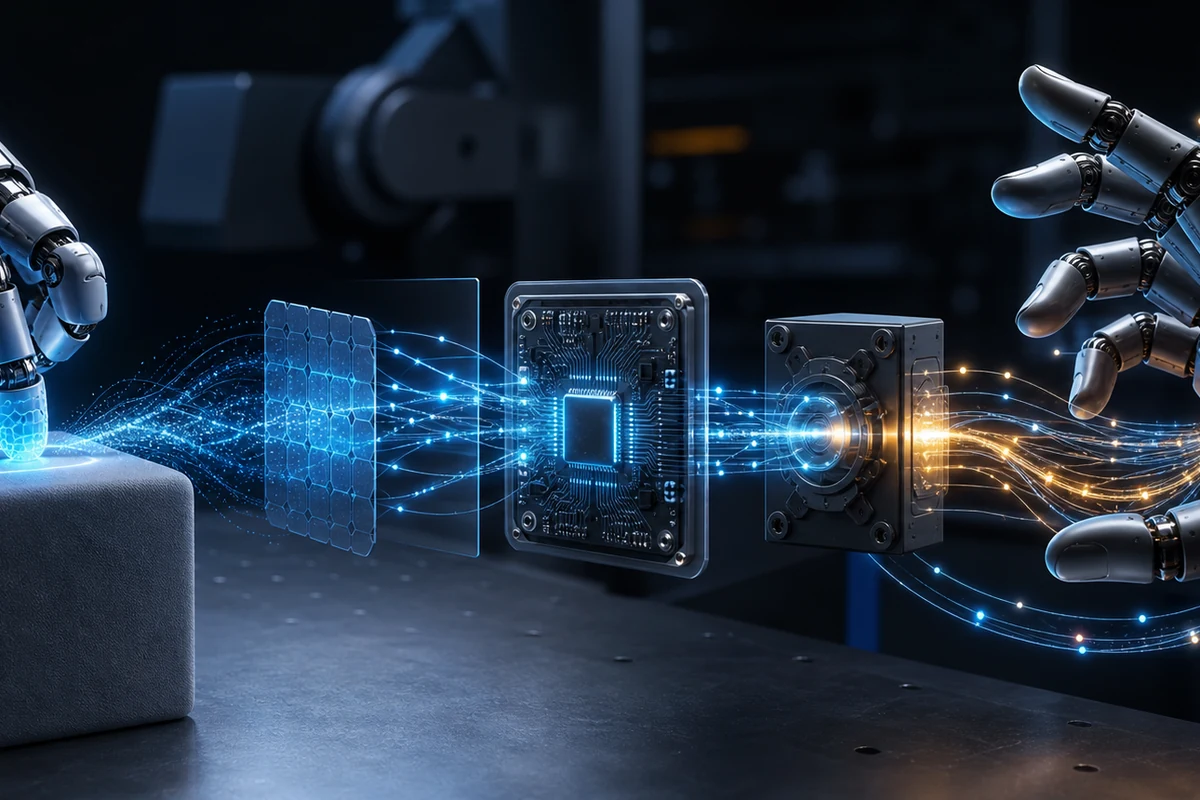
TactiDex is a July 2026 arXiv preprint that frames human-to-robot dexterous transfer as a contact problem, not only a kinematic imitation problem. The benchmark aligns whole-hand tactile signals with hand kinematics, wrist pose, and object state. The paper also introduces TactiSkill, a tactile-guided transfer framework evaluated on single-hand and bimanual tasks.
The source reports better manipulation success and physical realism than its compared methods, but the abstract does not provide a standardized numerical result suitable for comparison with other benchmarks. This brief therefore preserves the qualitative claim and avoids inventing a cross-paper leaderboard.
What the benchmark aligns
Kinematic imitation can reproduce joint motion while missing the physical interaction that made a human demonstration work. A hand can follow a visually plausible pose yet hover above the object, press too hard, or distribute load across the wrong fingers. TactiDex adds synchronized contact information to the transfer target.
| Data layer | Role in the benchmark | Evaluation question |
|---|---|---|
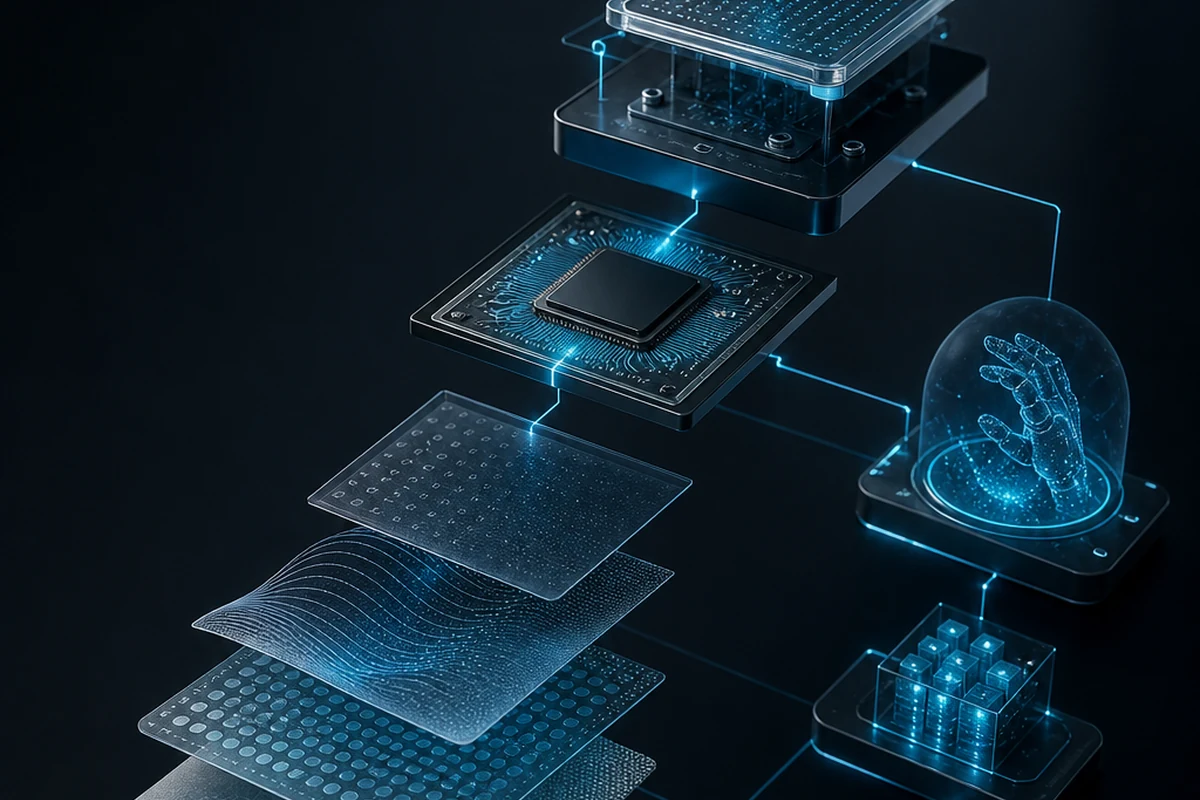
| Whole-hand tactile signals | Describes distributed contact and pressure over the hand | Does the robot establish a similar contact pattern rather than only a similar pose? |
| Hand kinematics | Describes articulated hand motion at multiple levels | Is geometric motion preserved under a different robot hand morphology? |
| Wrist pose | Connects local hand motion to global manipulation | Does the transferred action reach and orient around the object correctly? |
| Object state | Measures the interaction outcome | Did the object move or remain stable as the task requires? |
| Task descriptions and evaluation metrics | Organize comparisons across interactions | Are success and physical realism defined consistently? |
The useful distinction is between motion similarity and contact-level similarity. Neither replaces the other. A transfer can be kinematically accurate but physically implausible, or establish contact while failing the intended object motion.
TactiSkill's tactile supervision
TactiSkill uses a three-component tactile reward. Tactile guidance encourages the policy to form contact. Human-like alignment encourages the force or pressure distribution to follow the demonstration. Contact constraints penalize physically undesirable contact conditions. The components are combined with a kinematic imitation policy and a learned residual policy in the paper's framework.
This is structured supervision rather than simply appending a tactile vector to the policy observation. Touch specifies properties of a desired interaction and helps evaluate whether the retargeted robot motion is physically plausible.
Why this matters for robot learning
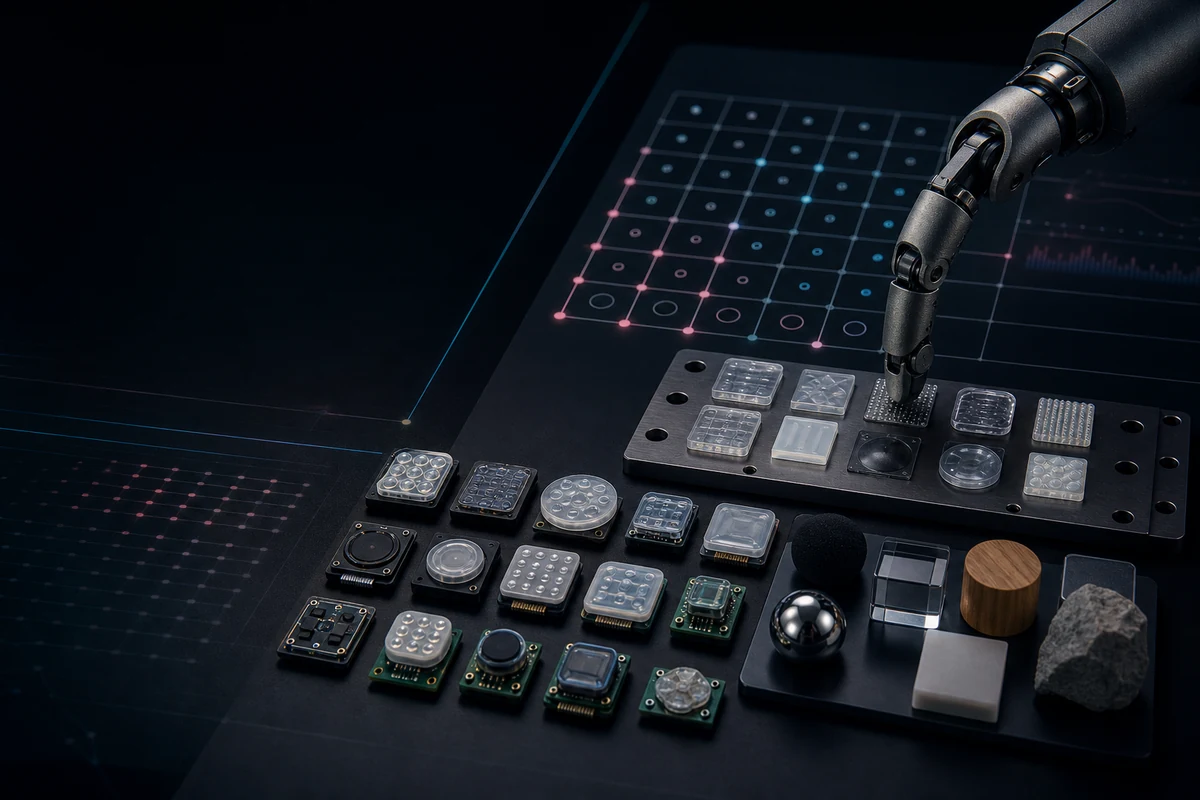
TactiDex connects human hand-object interaction data with robot policy learning. That creates several conversion problems: human and robot hands have different morphology, tactile layouts have different spatial support, sensor readings need calibration, and simulated contact variables may not match measured pressure directly.
The robot hands guide separates hand architecture from task evidence. The tactile manipulation guide explains how contact, force regulation, and slip fit closed-loop control. The robot learning hub places demonstration data inside imitation and reinforcement learning workflows. For dataset comparison, use robotics datasets for the broad data contract and the tactile robotics dataset directory for touch-specific sensor, robot, task, modality, split, and license fields.
TactiDex also has relevance to whole-body and humanoid tactile sensing, but its evidence is centered on hand-object interaction. It should not be cited as proof of full-body tactile intelligence.
What this does not prove yet
TactiDex is an arXiv v1 preprint. The reported superiority comes from the authors' experiments, definitions, simulation and deployment choices, and selected tasks. It is not independent confirmation that tactile-guided transfer will outperform kinematic transfer for every robot hand, sensor layout, object, or manipulation regime.
The work also does not show that a human tactile map transfers directly to any robot. Morphological retargeting, sensor-to-simulation calibration, contact modeling, reward weights, and hardware deployment all affect the result. Single-hand and bimanual experiments demonstrate coverage within the paper; they do not establish open-world generalization.
Evaluation checklist
- Report kinematic accuracy, contact quality, task completion, and object outcome separately.
- Document human and robot tactile layouts, calibration, rates, and synchronization.
- Explain how human contact distributions are mapped across robot morphologies.
- Preserve sequence-level splits and disclose repeated subjects, objects, and tasks.
- Compare kinematic-only and tactile-guided methods under matched training budgets.
- Test unseen objects, hands, contacts, and bimanual coordination patterns.
Primary sources
Check the data behind this research
Compare the reported collection with the publicly listed files, dataset license, split documentation and dated access evidence.
Read the directory’s public availability and reproduction analysis.
Continue the topic