Underwater self-healing electronic skin combines touch, damage detection, and repair
NUS researchers combined self-powered touch sensing, damage detection, and underwater self-repair in one electronic skin system for soft robotics and marine machines.

News brief - July 2026
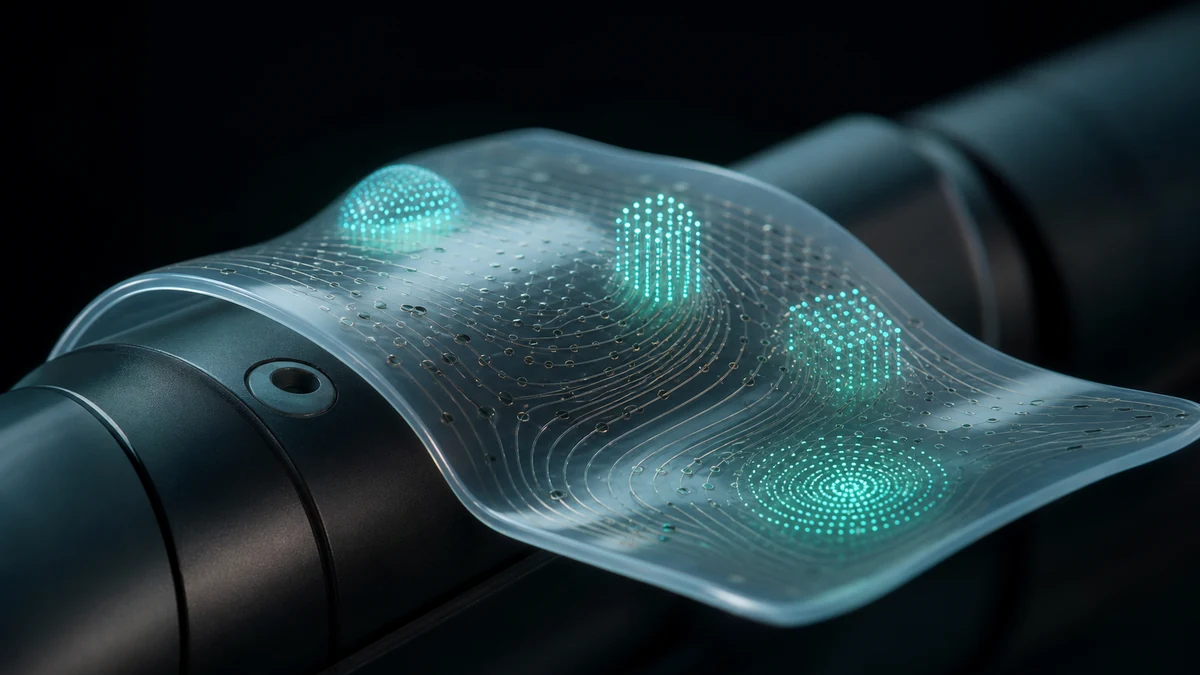
The National University of Singapore reported a self-healing magnetoelectric sensory system that can sense touch and proximity, detect damage, and recover after damage in both air and water. The research targets a practical weakness in electronic skin: a soft sensor may perform well when new but lose value quickly if a puncture, cut, or harsh environment disables it.
What the researchers reported
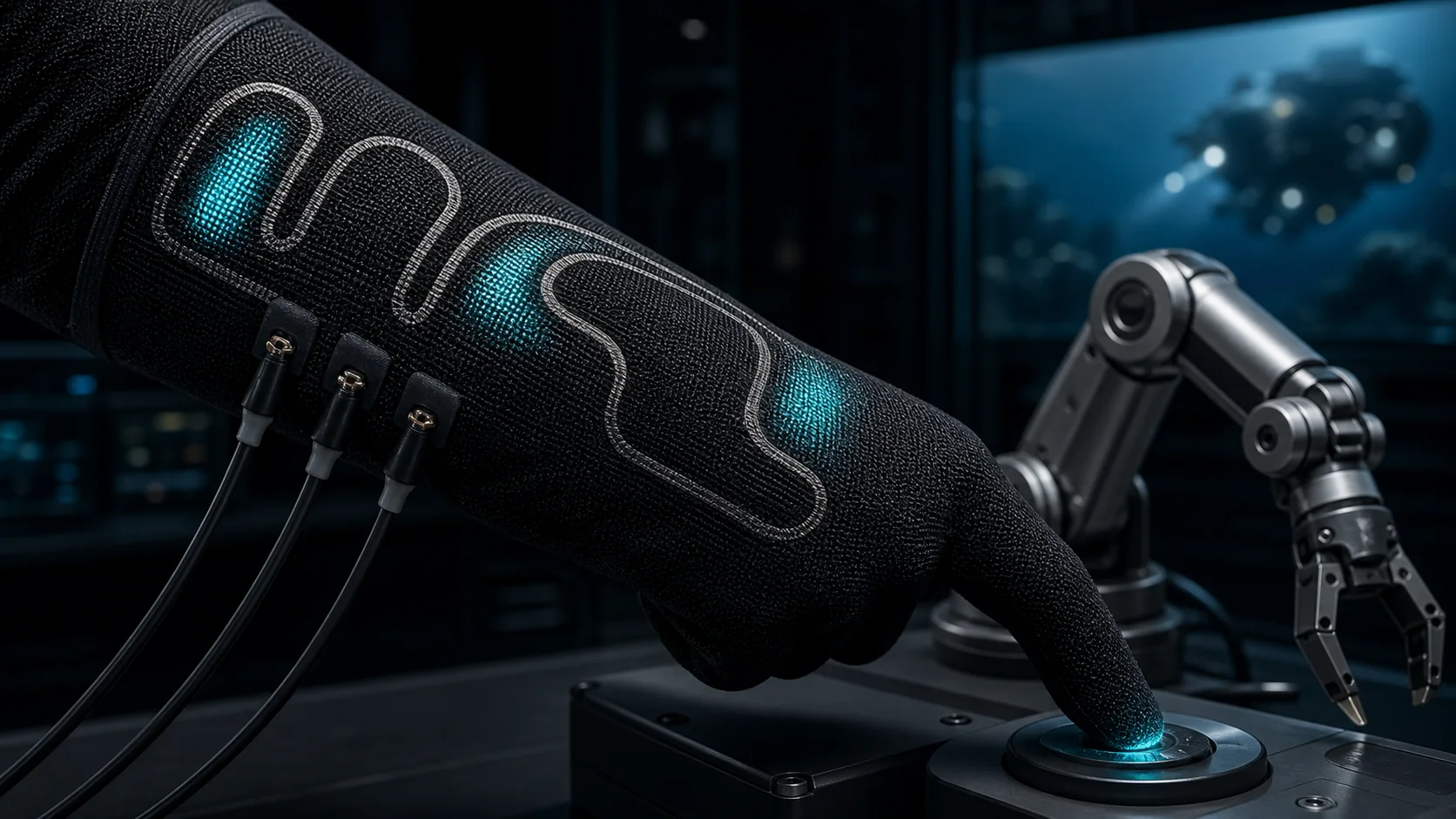
The system combines a damage-sensing layer with an electromagnetic sensing layer. Both use a stretchable, self-healing elastomer with liquid-metal conductors. The NUS team demonstrated the technology in a smart diving glove and in a robotic hand that grasped objects under water while monitoring damage.
The university reports that the material reached up to 92% elastic recovery. Under mild heating, it reached about 82% healing efficiency in air after seven days and nearly 100% under water after ten days. After needle punctures, the sensor recovered its original electrical performance within seconds; larger cuts required contact pressure and a longer healing period.
Why this matters for robot skin
Robot skin is exposed by design. It sits on hands, grippers, arms, soft bodies, and contact surfaces where abrasion, cuts, moisture, and repeated deformation are normal operating conditions. That makes recovery behavior as important as initial sensitivity.
The research also connects three functions that are often evaluated separately: sensing the environment, detecting damage to the sensor itself, and restoring useful operation. For field robots, this could reduce the gap between a laboratory material sample and a maintainable sensing surface.
What this does not prove yet
The work does not establish commercial readiness, indefinite underwater service, or suitability for every marine robot. The reported healing conditions and time scales also differ by damage type. Readers should separate rapid electrical recovery after a puncture from longer material healing after a severe cut.
Where this fits next
Compare this result with the single-material soft robotic skin research brief, which examines multimodal sensing and damage awareness across a flexible surface. The broader e-skin guide explains how electronic skin relates to robot skin, tactile sensing, and Physical AI.
Practical questions
- Why is underwater healing notable? Water can interfere with bonding and electronics, while underwater robots cannot always be recovered immediately for repair.
- Is self-healing the same as maintenance-free? No. Packaging, connectors, calibration, biofouling, and repeated damage still need evaluation.
- What should robot teams measure? Healing time, recovered signal quality, calibration drift, mechanical integrity, and performance after repeated damage cycles.
Source boundary
This brief summarizes the NUS report and the associated Advanced Materials paper. Performance values belong to the cited study. RoboSkin.ai adds editorial context and is not affiliated with the researchers.
Sources
Continue the topic