Color-changing tactile sensor turns robot contact into real-time pressure maps
A Queen Mary-led mechanochromic sensor converts contact, strain, and pressure into visible color fields that a standard camera can observe in real time.
News brief - July 2026
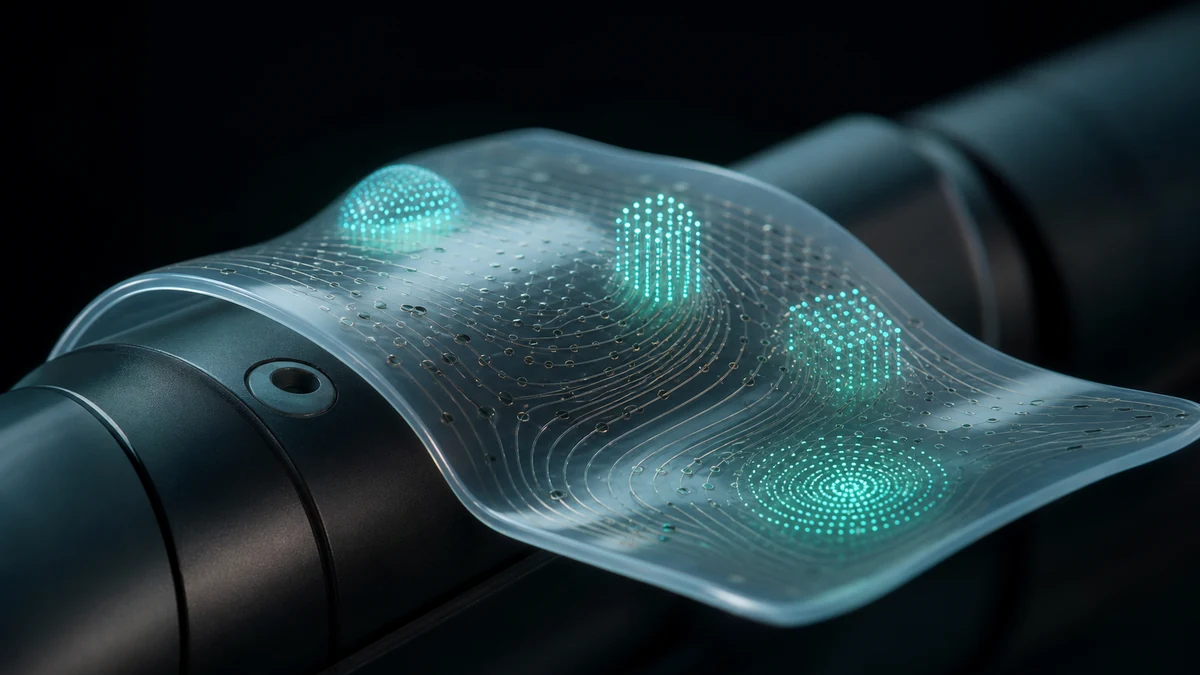
Researchers led by Queen Mary University of London reported a tactile sensor that converts mechanical interaction directly into changing structural colors. A camera observes those color fields as contact, strain, and pressure maps, making the material itself part of the tactile encoding process.
What the researchers reported
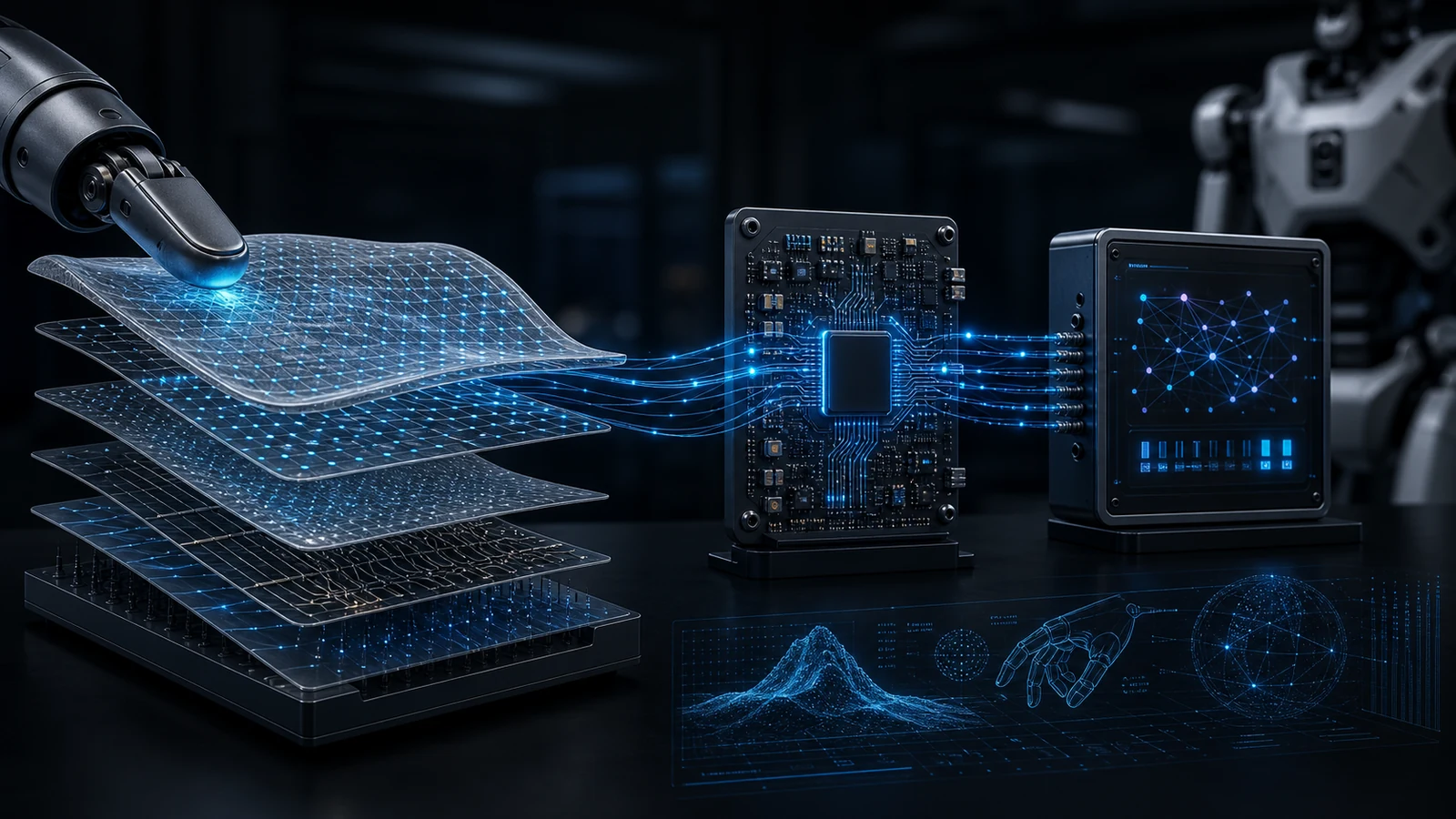
When pressure is applied to the soft sensing surface, the material produces spatially varying color patterns. The university report states that a standard low-cost USB camera can capture the signal in real time. The approach is designed to reduce dependence on dense electronic taxel arrays and heavy reconstruction pipelines.
The work uses mechanochromic materials: deformation changes their optical response, so mechanical cues become visible information. The researchers position the method for precision grippers, prosthetics, and surgical systems where small pressure changes matter.
Why this matters for robot skin
Vision-based tactile sensors are already important in robotics, but many systems reconstruct contact geometry from internal images using significant calibration and computation. Encoding pressure into the optical signal could simplify part of that path.
The broader lesson is that tactile sensing does not have to begin with one electrical channel per sensing point. Materials can perform part of the encoding before software receives the data. That may create new trade-offs among spatial resolution, latency, camera bandwidth, lighting control, durability, and manufacturability.
What this does not prove yet
The report does not establish that the sensor is ready for industrial deployment or that it outperforms every existing vision-based tactile sensor. Real robot use would still need evidence on repeatability, calibration drift, hysteresis, surface wear, contamination, camera placement, and performance across curved or large areas.
Where this fits next
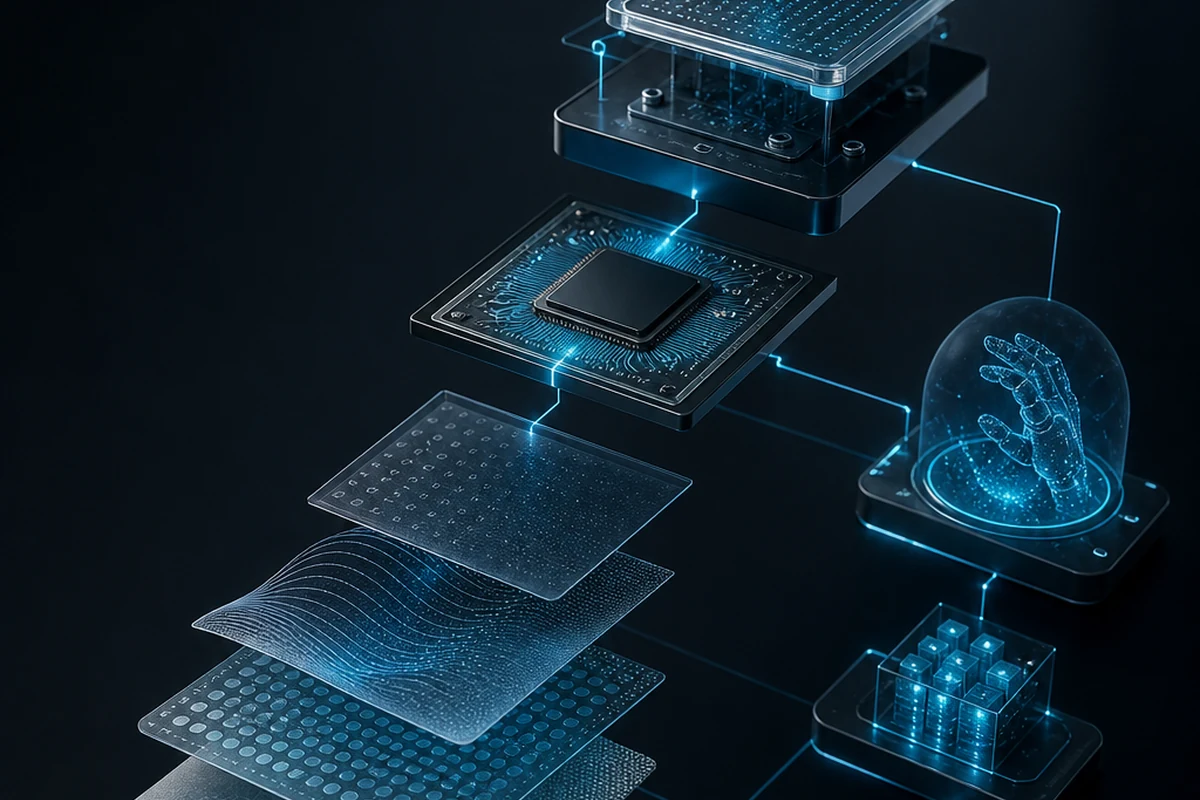
The tactile sensing technology map explains how a sensing surface connects to signal processing and robot control. The robot gripper tactile sensor guide frames pressure mapping as one part of grasp stability, slip response, and integration.
Practical questions
- What is mechanochromic sensing? It uses a material whose visible optical response changes under mechanical deformation.
- Why use a camera? A camera can capture a spatial field without routing a separate electrical channel from every sensing point.
- What should be compared next? Spatial resolution, response time, reconstruction cost, lighting sensitivity, durability, and calibration over repeated contact.
Source boundary
This brief summarizes the Queen Mary University report and linked Science Advances work. RoboSkin.ai did not test the sensor and does not claim product availability or comparative performance.
Sources
Continue the topic